

Meat Processing Industry
Decision Brain for meat processing industries
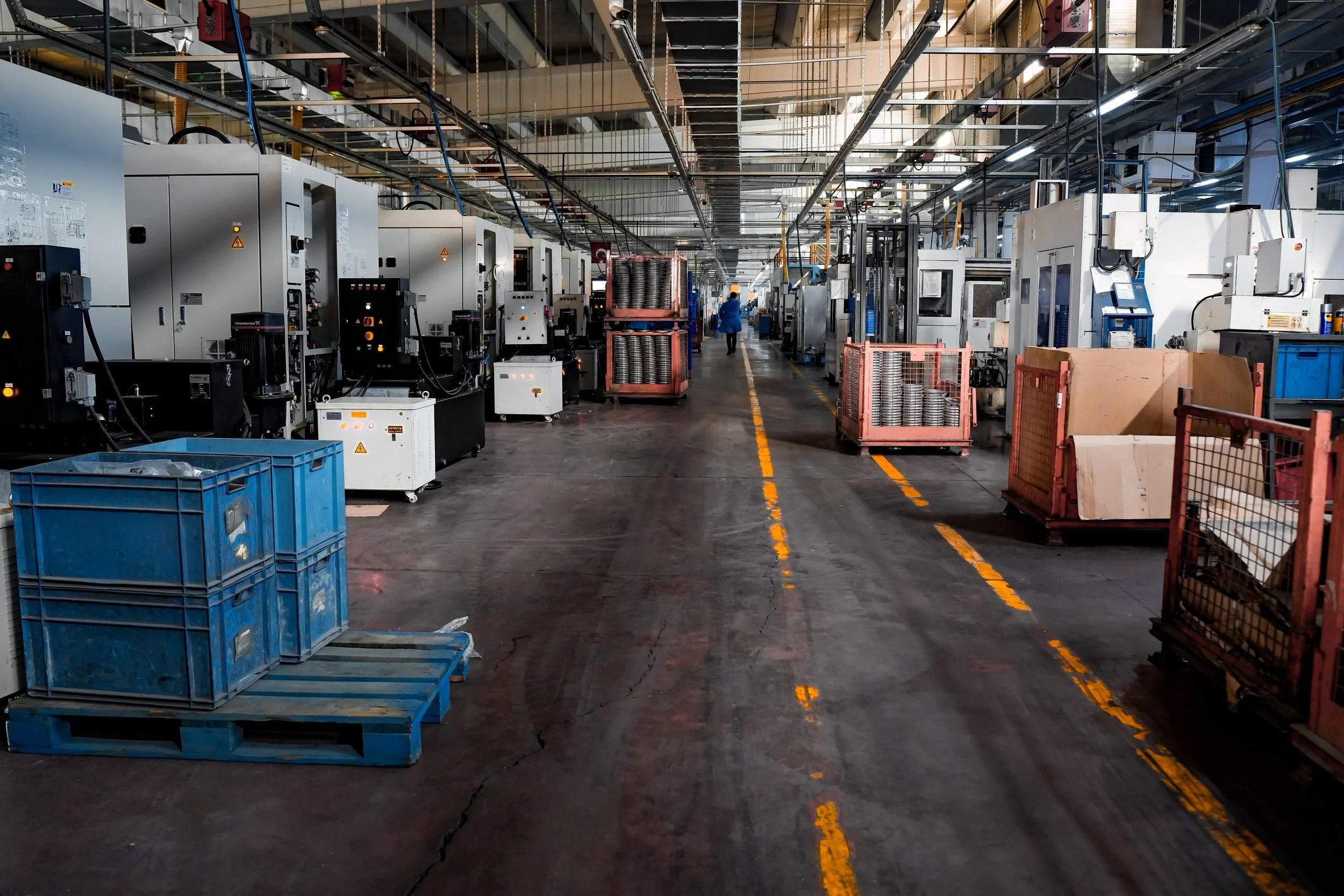
The meat processing industry is a vital component of the global food supply chain, transforming livestock into safe, high-quality food products for consumers worldwide. Processing operations include slaughtering, cutting, packaging, and distribution, all of which must comply with strict food safety standards and regulatory requirements.
Operating at a large scale, meat processors manage highly complex supply chains that connect livestock producers, processing plants, logistics providers, retailers, and foodservice companies. Ensuring efficiency and profitability across these interconnected operations requires precise planning and coordination at every stage of the value chain.
Operational complexity in meat processing
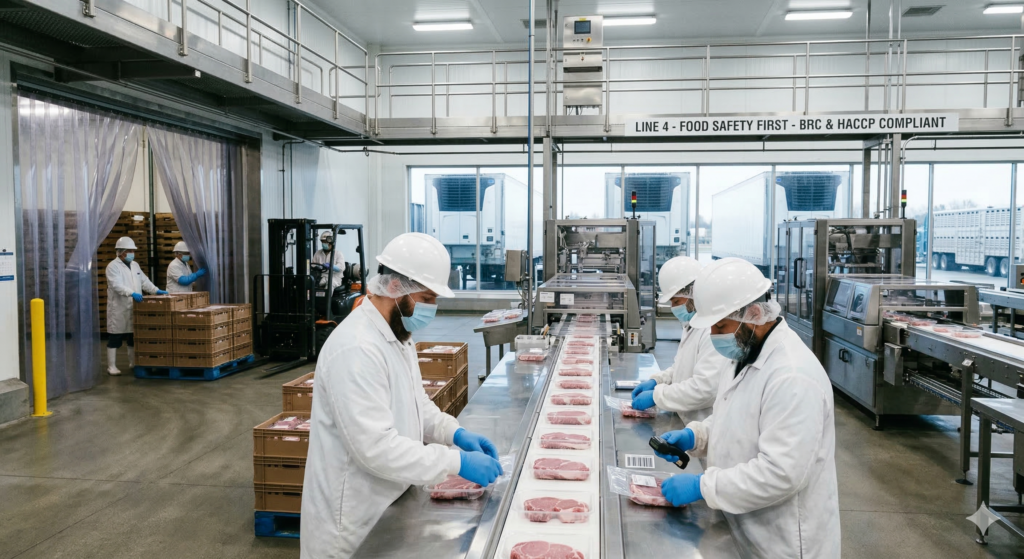
Unlike many manufacturing sectors, meat processing faces significant uncertainty in raw material supply. While processors typically have advanced visibility into expected livestock intake volumes, actual deliveries can change at short notice, as farmers may decide not to send animals at the last minute. This creates considerable operational risk for short-term production planning and capacity utilization.
In addition to supply uncertainty, meat processors must comply with an increasing number of regulatory and product-specific requirements, such as organic (bio) production, nitrite-free processing, and other labeling or certification standards. These constraints limit flexibility in how raw materials can be allocated and processed, further complicating operational planning.
At the same time, factors such as Livestock Production Assurance (LPA) requirements and biosecurity compliance also affect supply reliability, as animals must meet strict standards related to traceability, food safety, and animal welfare before entering the processing chain.
Moreover, meat processors must coordinate multiple tightly synchronized processes, including slaughtering, carcass cutting, trimming, processing, packaging, and cold-chain distribution. Each carcass yields multiple cuts with different market values and demand patterns, requiring careful allocation decisions to maximize overall value.
Balancing these factors, uncertain supply, strict regulatory constraints, production capacity, and fluctuating customer demand, is a core challenge. When planning is misaligned, excess products may need to be frozen, downgraded, or redirected, reducing margins and limiting the availability of fresh products.
Key challenges
Meat processing companies face several operational and strategic challenges:
Raw material variability
Differences in animal size and characteristics, combined with segregation requirements (e.g., bio vs non-bio), make production planning and yield forecasting complex.
Operational constraints
Processing facilities operate with strict capacity, labor, and food safety constraints.
Demand fluctuations
Market demand for different cuts and processed products change rapidly.
Product mix optimisation
Each carcass generates multiple products with different demand levels and margins, requiring continuous optimization of allocation and production plans.
Supply volatility
Livestock availability and prices are influenced by seasonal factors, weather conditions, and global market dynamics.
Margin pressure
Present decisions and optimisations in a succinct way, so that managers and stakeholders can understand easily. Build trust and speed up adoption with a platform that is simple to use.
Regulatory, composition, and timing constraints
Requirements such as organic (bio), non-organic, and nitrite-free products impose strict segregation and processing rules, while products must also meet defined timing windows to ensure freshness without processing meat that is too warm post-slaughter.
These factors create a highly dynamic environment where decisions must be made quickly and based on large amounts of operational and market data.
The role of advanced analytics and optimization
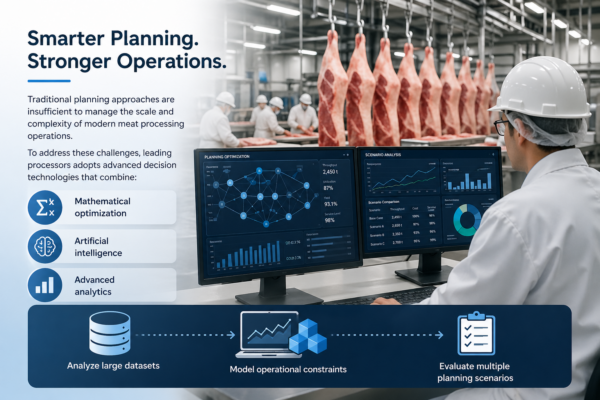
Traditional planning approaches are insufficient to manage the scale and complexity of modern meat processing operations. To address these challenges, leading processors adopts advanced decision technologies that combine:
Mathematical optimization
Artificial intelligence
Advanced analytics
These solutions enable companies to analyze large datasets, model operational constraints, and evaluate multiple planning scenarios.
Operational use cases
Optimization-driven decision support systems help processors:
Optimize production planning and scheduling
Maximize carcass and product yield
Align supply with market demand
Optimize pricing and product mix
Balance fresh and frozen product flows
Manage uncertainty and variability
Ensure compliance with operational and regulatory constraints
Business impact
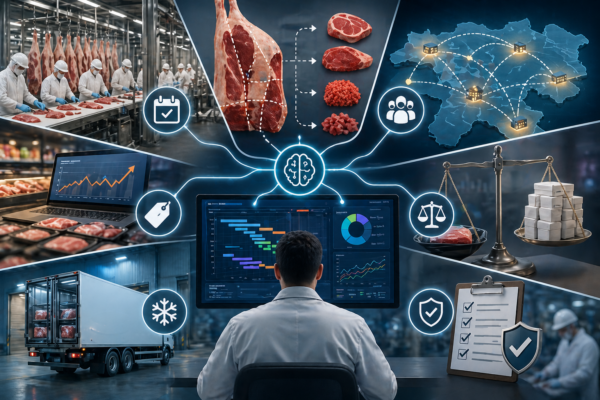
By adopting these solutions, meat processors can achieve:
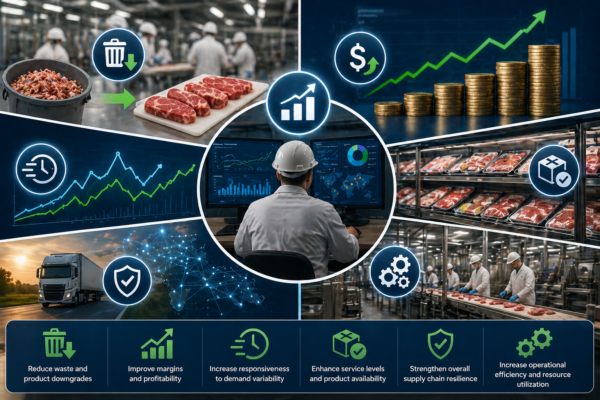
Reduce waste and product downgrades
Improve margins and profitability
Increase responsiveness to demand variability
Enhance service levels and product availability
Strengthen overall supply chain resilience
Increase operational efficiency and resource utilization
By integrating data from procurement, production, and sales, these technologies provide a holistic view of operations and support better decision-making at both operational and strategic levels.
Enabling smarter decisions with Decision Intelligence
Advanced decision technologies enable meat processors to transform complex operational challenges into structured optimization problems. By combining AI, mathematical optimization, and domain expertise, companies can improve planning accuracy, increase resource utilization, while addressing growing complexity across quality, regulatory, and operational requirements.
Client case study: Cooperl – optimizing production planning for leading European pork producer
Cooperl is currently implementing DecisionBrain’s advanced production planning system, which is expected to deliver significant improvements in demand satisfaction, capacity utilization, and margin optimization. The tailored solution is designed to enable better inventory management, reduce waste, and align production more closely with real-time market demand.
Houston + Decision Brain
Driving intelligent operations
As your technology partner, Houston works alongside your team to implement and integrate Decision Brain solutions seamlessly into your operations.
Take control of complexity
Decision Brain gives you the power to solve problems before they arise, plan smarter, and operate with precision. Talk to Houston today to discover how Decision Brain can transform your business.